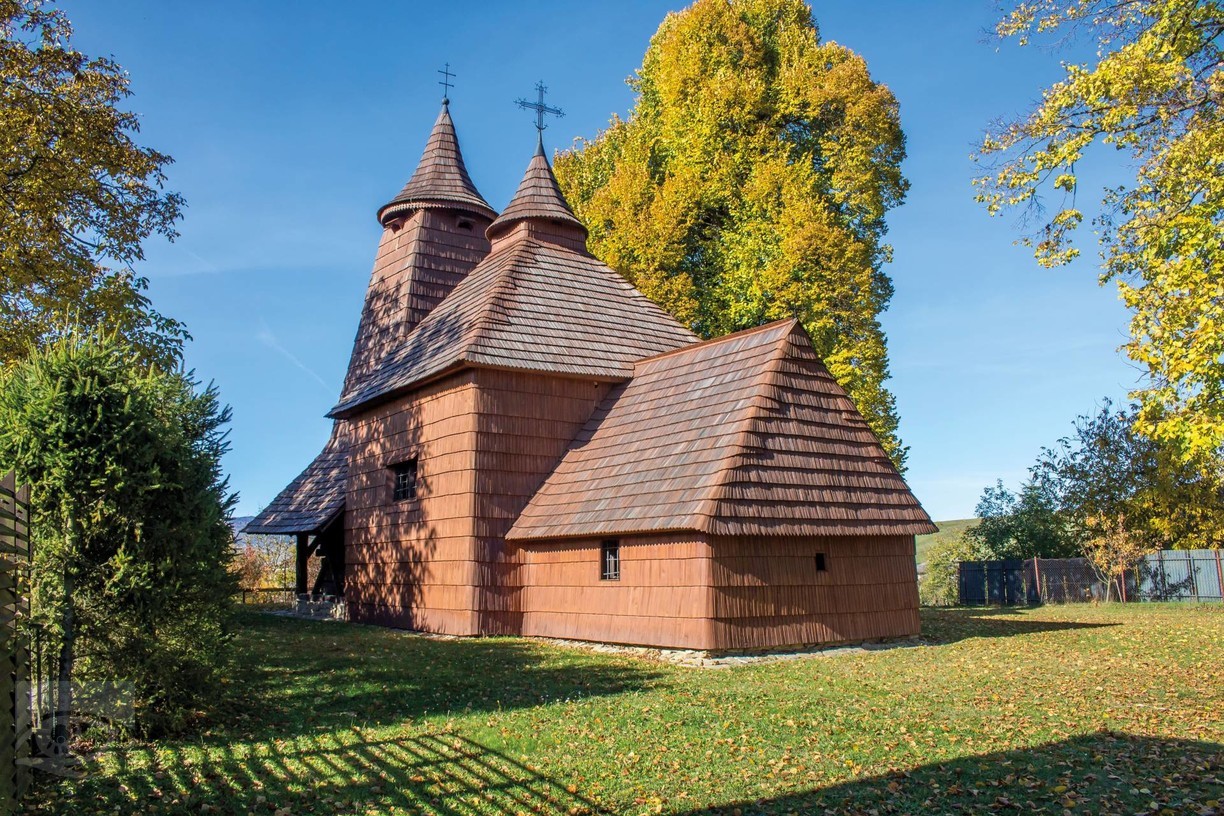


The unique features of the Prešov region include wooden churches. There are more than thirty of them, most of them in the districts of Snina, Svidník and Bardejov. Many of them are built without the use of a single metal nail. Wooden churches are unique both architecturally and sacrally. The charm of the temples is enhanced by their usual location on the hillsides of small villages, surrounded by picturesque nature.
Most of the churches are of the Greek-Catholic rite. They are characterized by the division of the interior into three basic parts, namely the narthex (babinec), the nave and the sanctuary. The dominant feature of each temple is the iconostasis, which separates the sanctuary from the nave. Among the wooden churches, Orthodox churches are also represented, and to a lesser extent Evangelical and Roman Catholic churches.

In 2008, four wooden churches in the territory of the Prešov Region were inscribed among the UNESCO World Cultural Monuments (the Greek-Catholic churches in Ladomirova and Bodružal, the Roman-Catholic church in Hervartov and the Evangelical church in Kežmarok). Several wooden churches are equipped with audio guides, thanks to which the visitor will learn many interesting facts and facts about these wooden pearls of Slovakia.
11 wooden churches from the Prešov region that you should not miss
Every single wooden temple is unique and worth a visit. You can go through them all Wooden Temples or be inspired by a shortlist:
WATCH: CHURCH OF ST. MICHOLAS (UNESCO)
Also called "a jewel among churches" - inscribed on the World Heritage List UNESCO. It is one of the oldest and most beautiful wooden churches in Slovakia. The three-part log building with a richly articulated shingle roof and three towers was built in 1658. The sacral monument is part of a unique complex on an elevated site in the centre of the village of Bodružal in the Svidník district.
The Greek Catholic Church of St. Nicholas was miraculously saved during World War II when it was hit by a shell that didn't explode. The brave women of the village carried it out, risking their own lives in the process, where it was defused by soldiers on a nearby hill. A reminder of this event can still be found in the roof of the church.

LADOMIR: CHURCH OF ST. MICHAEL THE ARCHANGEL (UNESCO)
The Greek-Catholic church in Ladomirova inscribed on the World Heritage List UNESCO belongs among the most representative temples of the Eastern Rite on the Slovak side of the Carpathians. It was built in 1742 without the use of a single metal nail modelled after the Subcarpathian-Russian lemkos and as the only lemko type it has an octagonal ship's cupola. This influence is also evident in the layout and the placement of the bell tower above the part marked "Granny's" - which is a kind of antechamber where women who were not allowed to enter the temple used to stay. In the interior of the church, visitors admire the murals (frescoes) and icons, created in accordance with the Byzantine style.

HERVARTOV: CHURCH OF ST. FRANCIS OF ASSISI (UNESCO)
The Roman Catholic wooden church of St. Francis of Assisi (Hervartov, Bardejov district), made of red spruce, was built in the Gothic style at the end of the 15th century. It is situated on a small hill in the centre of the village of Hervartov, is listed as a UNESCO World Heritage Site.
It is about the oldest and one of the best preserved wooden churches in Slovakia. The church is enclosed by a stone wall with pilasters, which gives visitors the impression of a small fortress. The sacral building consists of a polygonal sanctuary, a nave, a sacristy and an undercroft, which has been modified to create a granary. It also includes a bell tower.

TROČANY: ST. LUKE'S CHURCH
In the centre of the village of Tročany in the Bardejov district stands the wooden Greek-Catholic Church of St. Luke the Evangelist, a national cultural monument. It was built in 1739. Some of the furnishings come from the original church, which stood on the same site as early as 1338. The building is surmounted by a shingled tower with one bell. The original door to the church has been preserved. The iconostasis captivates with its simplicity and beauty. It consists of several parts and the icons date from the 16th to the 18th century.
The most valuable painting of the iconostasis Calvary with Gothic elements dates back to 1608. Other treasures are icons of St. Luke, the Crucifixion and St. Michael painted on wood.

GOODBYE: CHURCH OF ST. PARASKY
The wooden church in the Svidník district was built at the beginning of the 18th century, in 1705. The Greek-Catholic Church of St. Paraskieva is built on the plan of the Greek cross. It is about the only temple built in this way in Slovakia. The temple is characterized by three unequal high domes, which are topped by towers with towers with towers. The most precious monument of the interior is the iconostasis from the 18th century.
The iconostasis has a five-aisle architecture, with icons placed on five floors with themes from the New Testament, figures of apostles, prophets and other saints.
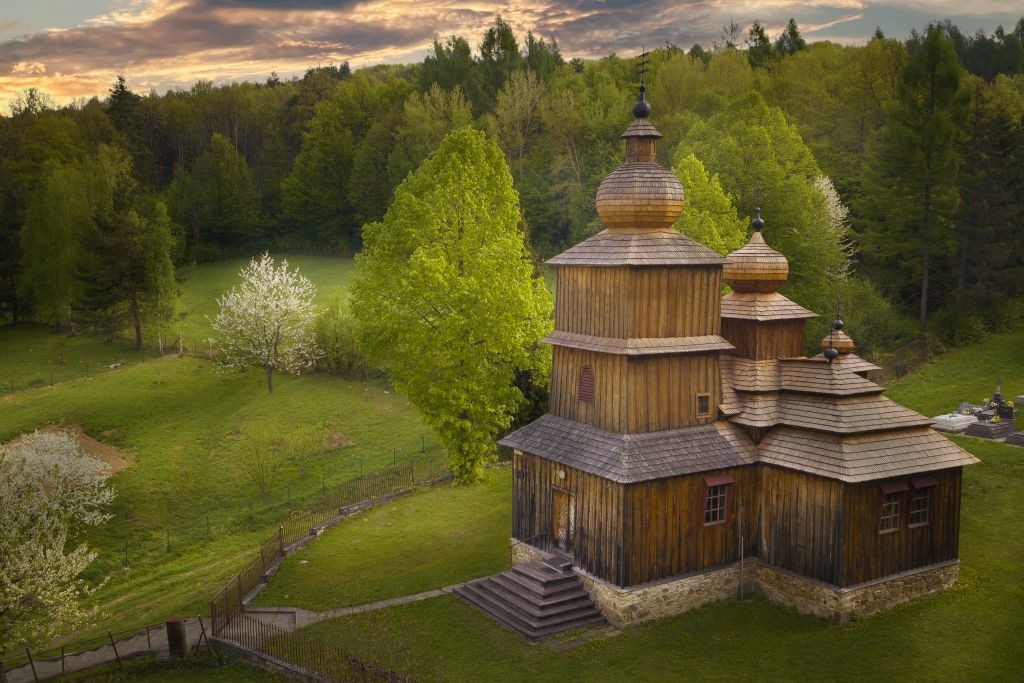
KEŽMAROK: CHURCH OF NAJSV. TRINITY (UNESCO)
The church is located next to the New Evangelical Church, which resembles a mosque. A similar combination of such architectural styles you probably won't find anywhere in the world.
The Evangelical Articular Church of the Holy Trinity dates back to the times of religious freedom of Protestants, who were allowed to build churches on the basis of the 26th article of the 1681 Council of Sopron outside the city walls in a specific location and exclusively at the expense of the church. The first wooden church was built as early as 1687. In 1717 the church was incredible three months built to its present form.

The prototype of the church was a log church with the plan of an isosceles Greek cross in Amsterdam on Noorder Kerk. The wooden evangelical articular church was listed in the UNESCO within the registration of the ensemble of wooden churches in the Slovak part of the Carpathian Arch in 2008.
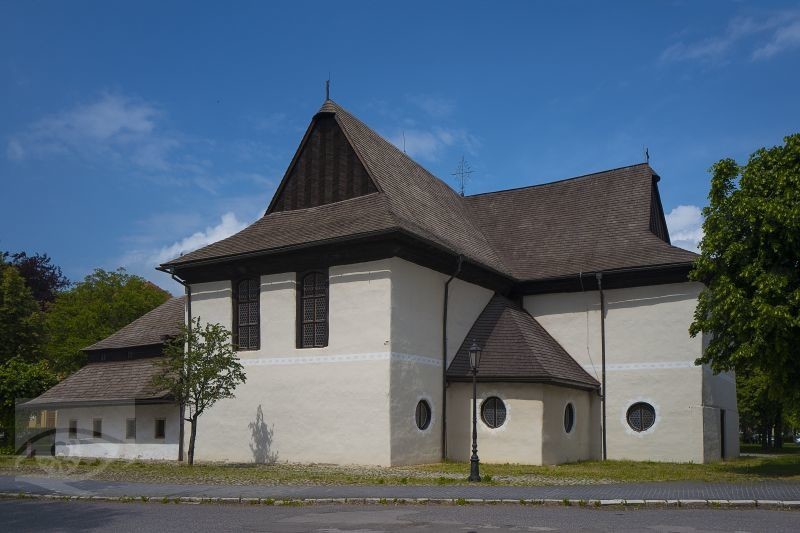
MIROLE: TEMPLE OF PROTECTION OF THE PRESV. OF THE MOTHER OF GOD
The wooden Greek-Catholic Church of the Protection of the Most Holy Mother of God in Mirol was built on a dominant platform in 1770. It was dedicated to the Protection of the Most Holy Mother of God.
After the end of World War 2, when it was badly damaged, it was repaired immediately in 1945. Originally, the whole area of the church was surrounded by a wooden fence with a wooden gate. Today only the gate remains. The construction of the temple is log, the tower has a columnar structure. The roof of each tower is pyramidal with a flat onion. The iconostasis (NKP) is characterised by its variety of colours.

LOWER CHAMBERLAIN: CHRÁM PRESSURE PROTECTION. BOHORODICE
The original wooden Greek-Catholic Church of the Protection of the Most Holy Mother of God was probably built in the middle of the 18th century.
It was heavily damaged during World War I and gradually removed in the 1960s. The present wooden church was built in 1938 and rededicated to the Protection of the Most Holy Mother of God. This temple is probably the only one in Slovakia that was built by a professional architect. At the end of World War II, in 1944, the whole village was completely destroyed and the church damaged. After the end of the war in 1946 it was repaired and further major repairs were carried out in the mid-1960s.

HARD SINK: CHURCH OF ST. JOHN THE BAPTIST
The wooden Greek-Catholic church in Kalná Roztoka was built at the end of the 18th century, in 1750. It is dedicated to St. John the Baptist. The wooden church is currently "in a fur coat", i.e. it is plastered and whitewashed with lime in an attempt to protect the temple from bad weather. Despite the fact that the plaster gives the impression of a solid brick building, it is a three-part, three-space, single-aisle temple with two crosses. The entire roof of the temple as well as the tower itself is covered with shingles.
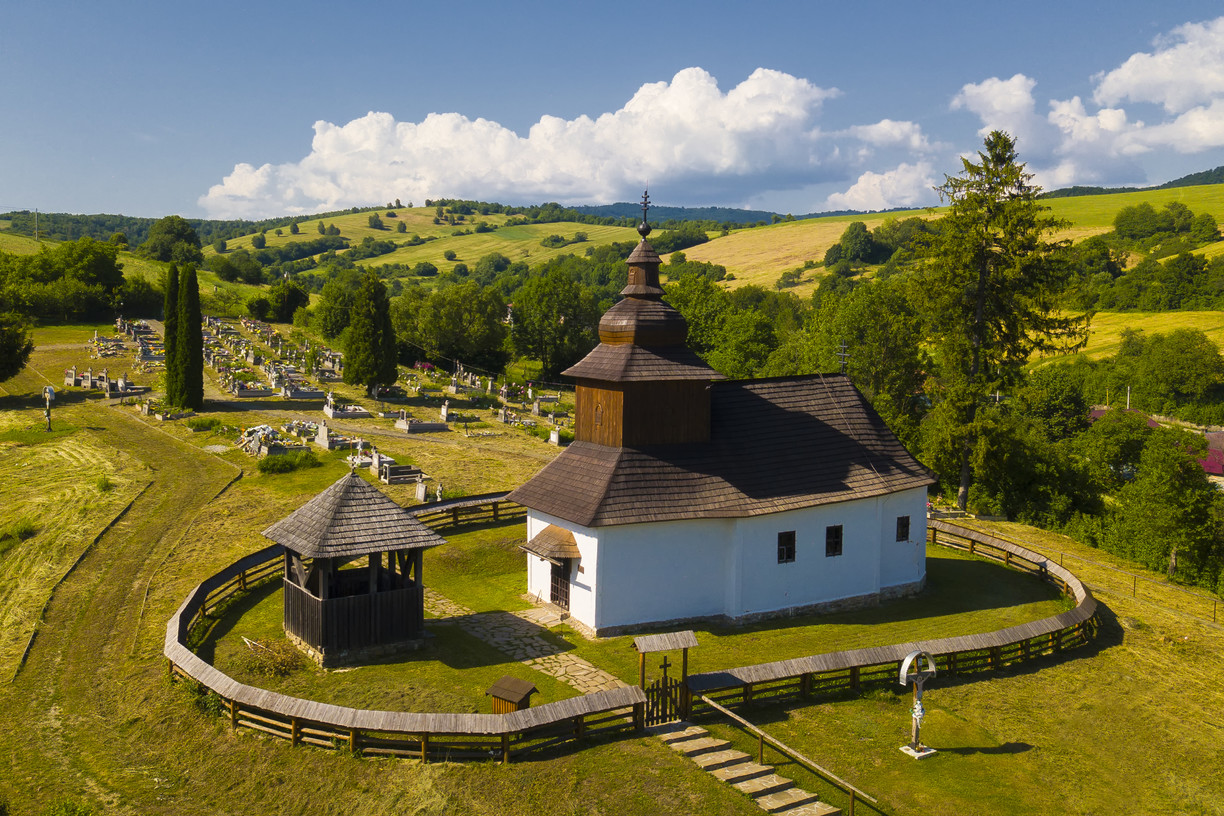
TOP: CHURCH OF ST. MICHAEL THE ARCHANGEL
The Greek-Catholic wooden church of St. Michael the Archangel is situated in the small village of Topoľa, which lies in the district of Snina, in the area of the Poloniny National Park. It was in this village that Alexander Duchnovich, an important national and cultural figure, was born at the beginning of the 19th century in the family of a Greek-Catholic priest. The wooden church in Topol dates back to 1700. Four-row iconostasis dates from the mid-18th century and stands out for its variety of colours.
Part of the area is also a bell tower and mortuary - a smokehouse, which was used during epidemics.
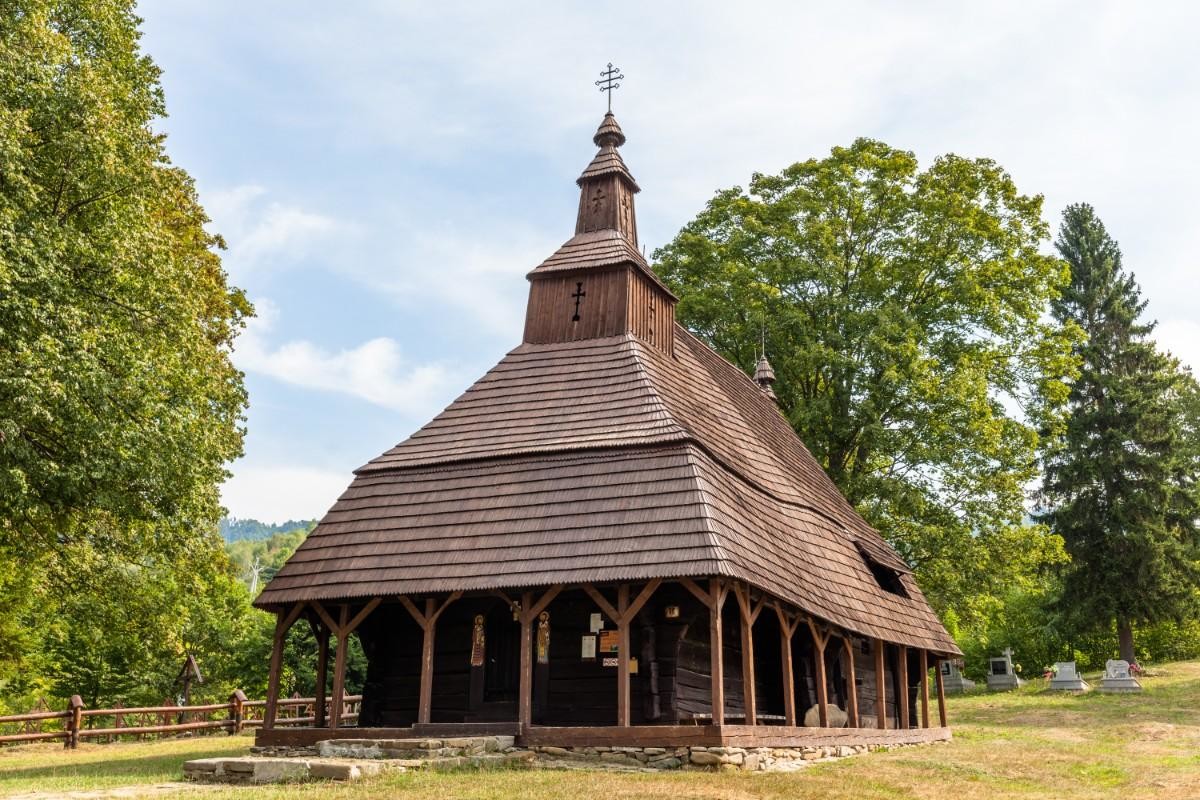
BREZHANY: ST. LUKE'S CHURCH
The unique wooden Greek-Catholic church of St. Luke in Brežany was built in 1727 and is dedicated to St. Luke the Evangelist. It is the only wooden church in the Prešov district. Initially, all the inhabitants of the village were Greek Catholics, but in the 1950s they converted to the Western rite due to various Orthodoxization efforts. The temple has remained in the ownership of the Greek Catholic Church, but is used by Roman Catholic believers.
The interior furnishings of the church date from the first half of the 18th century, the iconostasis with four-row architecture dates from 1733. Its uniqueness lies in the the omission of the classic Crucifixion or at least the cross, which normally terminates the iconostasis in the middle of the top.