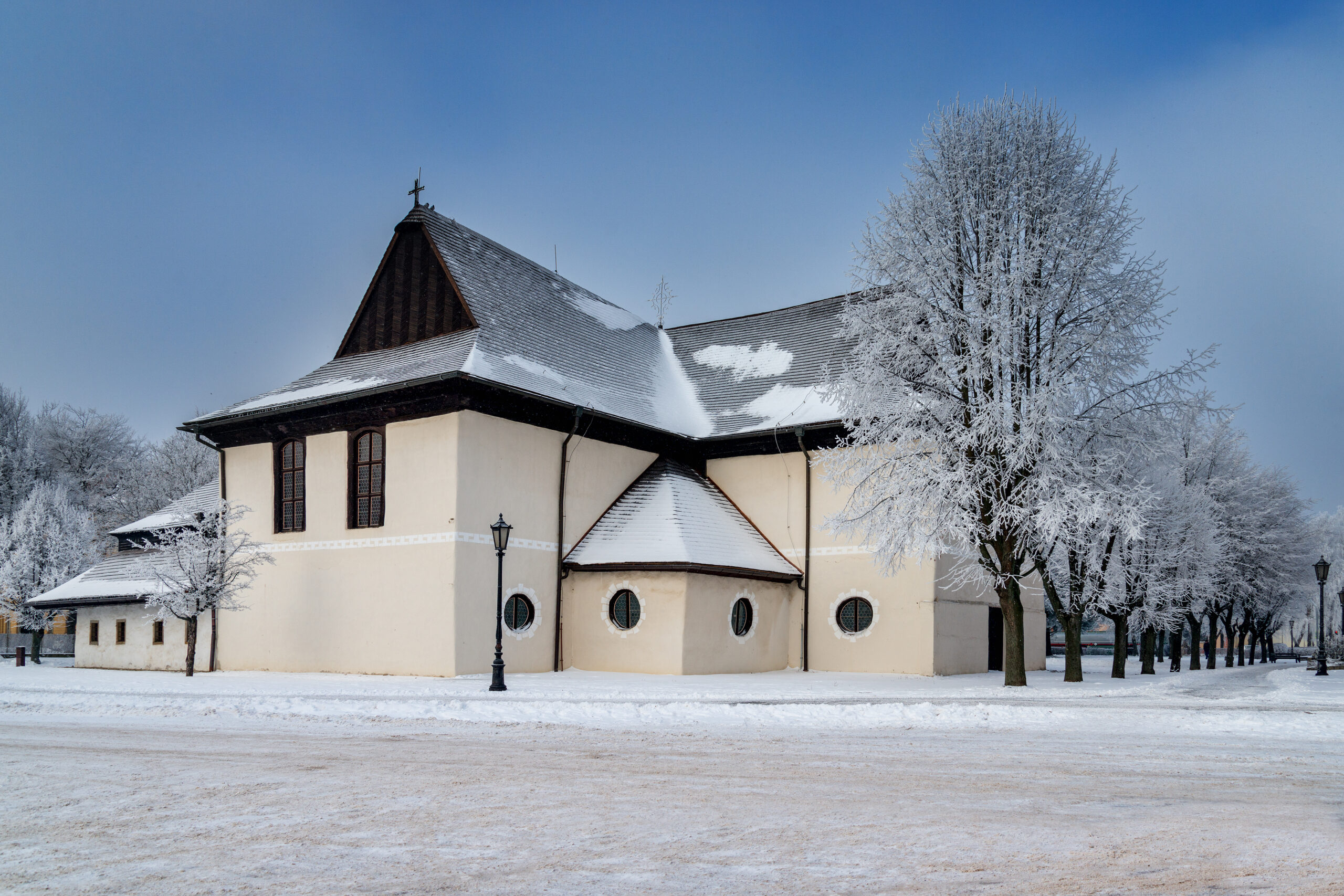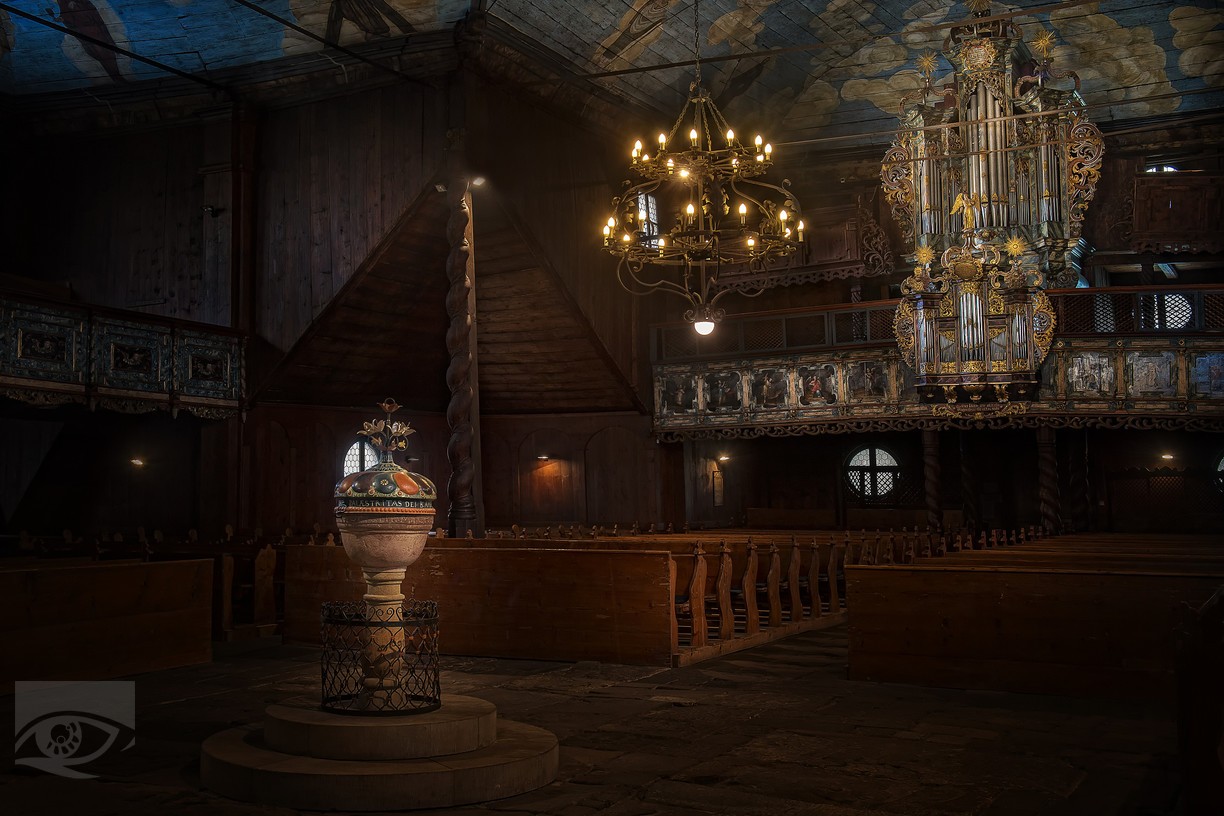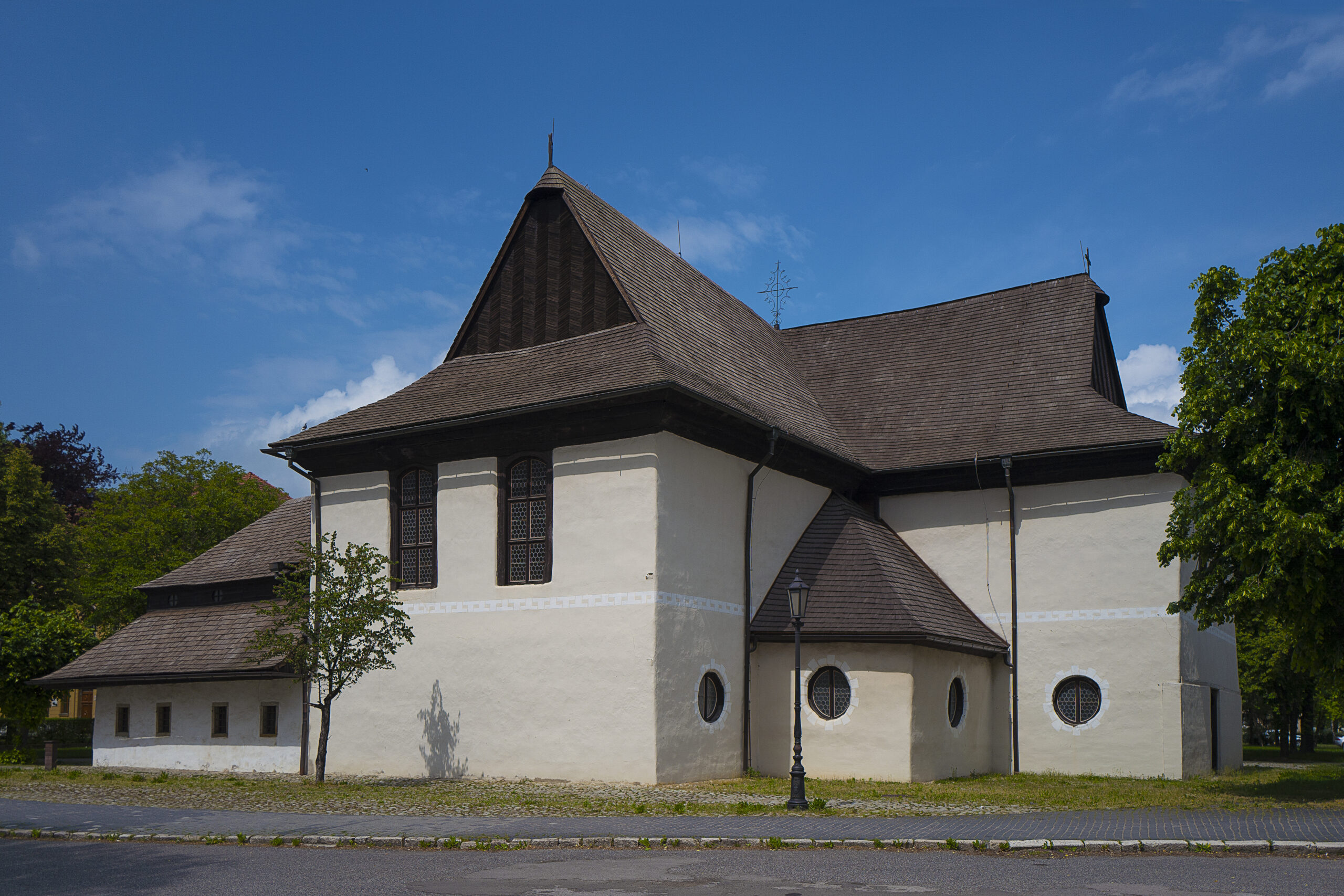


Kostol Najsvätejšej Trojice or The wooden articular church in Kežmarok is listed among the monuments UNESCO and comes from the time of religious freedom. The first wooden church was built in 1687. In an incredible three months it was in 1717 the church was rebuilt to its present form. The church is also known locally as "small Sistine Chapel in Spiš.
The church dates back to the time of religious freedom of Protestants, who were allowed to build churches on the basis of the 26th article of the 1681 Council of Sopron outside the city walls in a specific location and exclusively at the expense of the church. The cheapest building material was wood, which is why the last five original churches that still survive in Slovakia were built of wood.
The first wooden church was built in 1687. In 1717 the church was built in an incredible three months to its present form. The prototype of the church was a log church with the plan of an isosceles Greek cross in Amsterdam on Noorder Kerk.
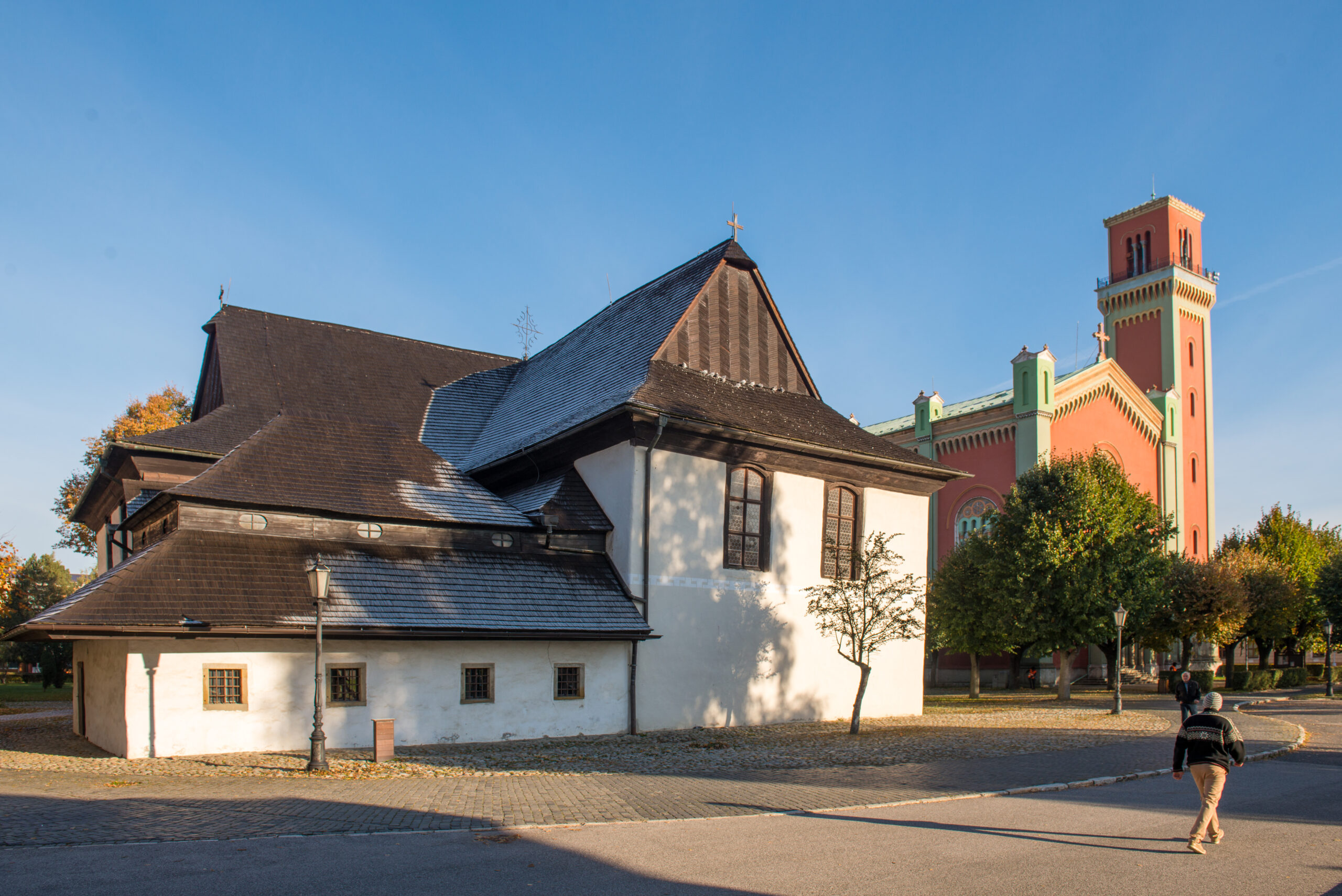
Stavba je z vonkajšej strany pokrytá ochrannou bielou omietkou a stojí vedľa New Evangelical Churchwhich resembles a mosque. You probably won't find a similar combination of such architectural styles anywhere in the world.
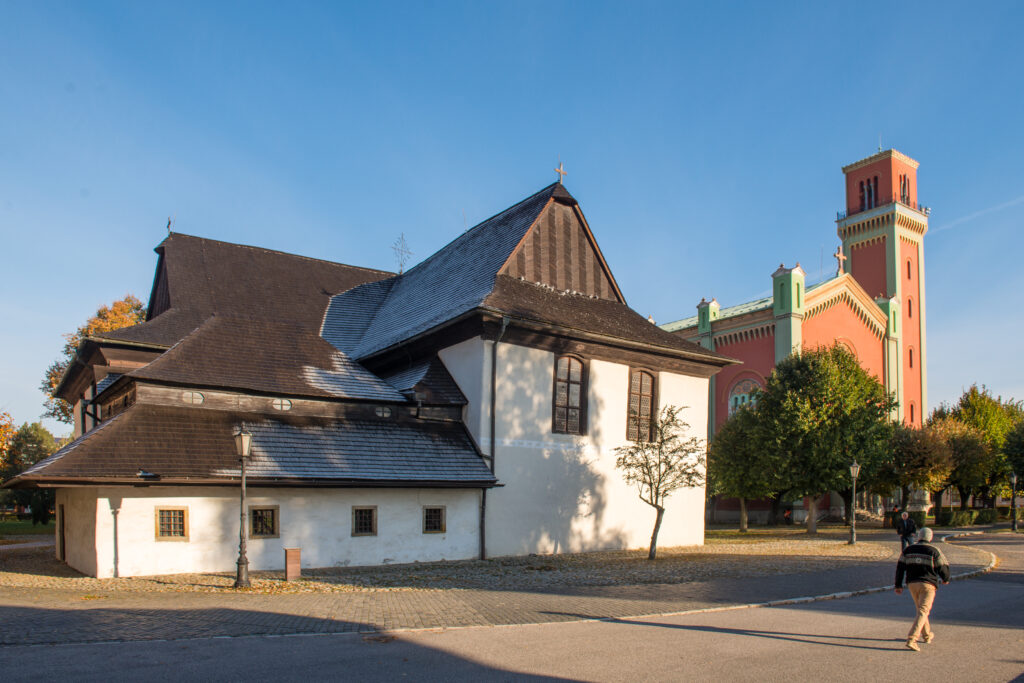
The wooden evangelical articular church has been inscribed in the UNESCO list within the enrolment of the ensemble of wooden churches in the Slovak part of the Carpathian Arc in 2008.
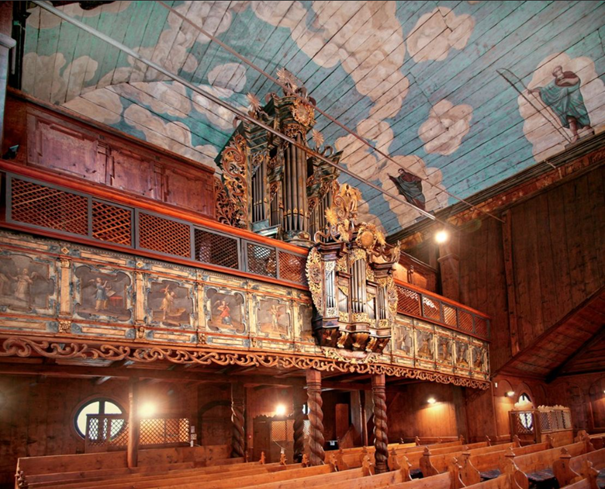
This type of church spread to Germany and the Nordic countries and reached Hungary via Silesia. Protestants from all over northern Europe contributed financially to the construction of the Holy Trinity Church in Kežmarok, and the kings of Sweden and Denmark ordered collections to be made in their countries for this purpose. It is said that Swedish sailors helped build it and left behind a monument - the top of the interior resembles the inverted bow of a ship and the windows are round like on ships.
In fact, the inhabitants of other towns also participated in the construction of the wooden church in Kežmarok. The builder was Juraj Müttermann from Poprad, the painter was Gottlieb Kramer from Levoča, the organ was built by Vavrinec Čajkovský from Levoča and it was completed by Martin Korabinský from Spišská Nová Ves. All the woodcarving was done by Ján Lerch from Kežmarok.
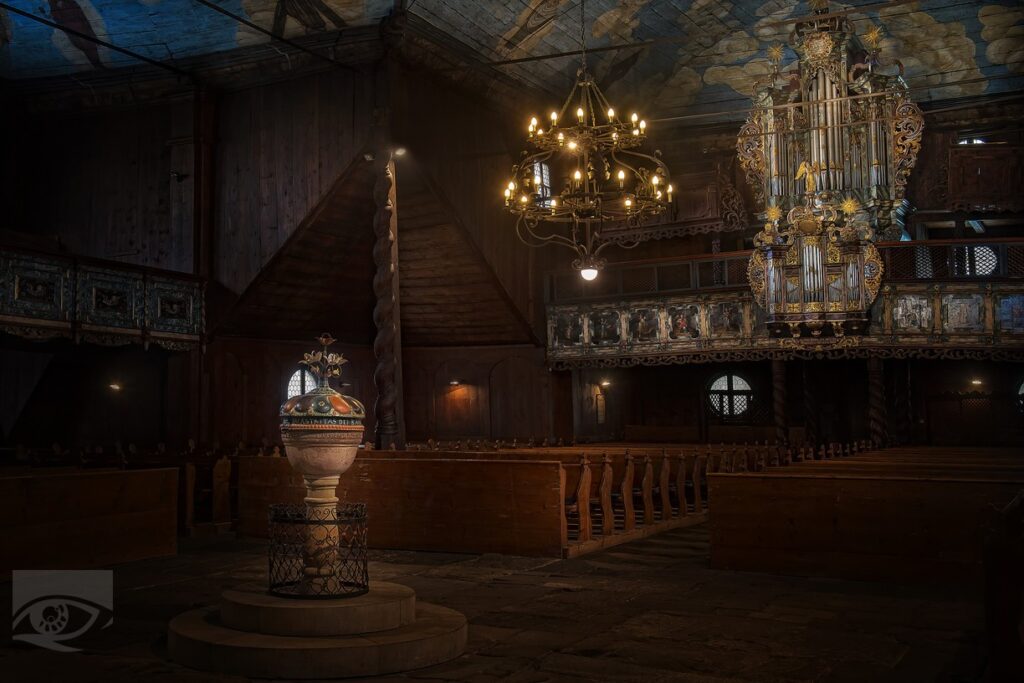
The church is built in the style of folk baroque. The massive painted vault is supported by four spiral columns and perimeter walls. The ground floor and six choirs are space for over 1 500 people. After the general renovation in 1991-1996 the church again became a place of worship of the Kežmarok Ev. a. v. church.
Wooden Articular Church in Kežmarok SK Audio
Source: www.ecav.sk, Wikipedia, www.tatryspispieniny.sk
Cover photo: Jano Štovka, MQEP