

Slovakia boasts more than a hundred castles. A large part of them are ruins surrounded by nature. Many of them are coming back to life after centuries and are undergoing gradual restoration. The largest number of castles currently undergoing restoration is in the Prešov Region, with 13 castles in the works.
The castles are also brought closer to tourists thanks to various events that attract visitors to fairy-tale afternoons, castle festivals or tastings of period food.

In total, tourists can enjoy two large castles (Kežmar Castle and Ľubovňa Castle), 14 ruins, 6 preserved manor houses and 2 palaces in the Prešov Region.
Nine castles from the Prešov region that you should not miss:
SHARIS CASTLE
Šarišský castle (Prešov district) belongs to the the largest medieval castle in Slovakia. Its total built-up area exceeds 2.7 hectares. Archaeological research has proved the settlement of the castle hill already in the Neolithic. The first mention of a castle named Sarus dates back to the 13th century. There is a paved asphalt road leading to the castle and it is also possible to get there by bicycle.
Popular events include Film Night at the Castle and Šariš Castle Days, which take place in early September and bring visitors closer to the atmosphere of historical times, when the castle was not only fought in...

KAPUŠIAN CASTLE
Another castle from the Prešov district was first mentioned in historical documents in 1249 under the name Tobul. The last and longest owner of the castle was the Kapy family, who owned it until 1918. The Hungarian Parliament decided on its extinction by setting fire to it, which must have been done by its own owner Eva Gergelaky to prevent the castle from becoming the centre of the anti-Habsburg uprising. During its existence, it also experienced a conquest by the Turks.
Thanks to the restoration an observation tower and a children's playground with historical elements grew up in the castle.

FLOAT
Above the wide valley of the Poprad River, in the district of Stará Ľubovňa, there is a hill bearing the ruins of the 13th century castle Plaveč. The castle was built to defend the road to Poland, at the ford over the Poprad River. In 1856 the building burnt down and since then it was in ruins until the beginning of the restoration in 2014. The castle is easily accessible from the village of Plaveč, by a 10-minute route.
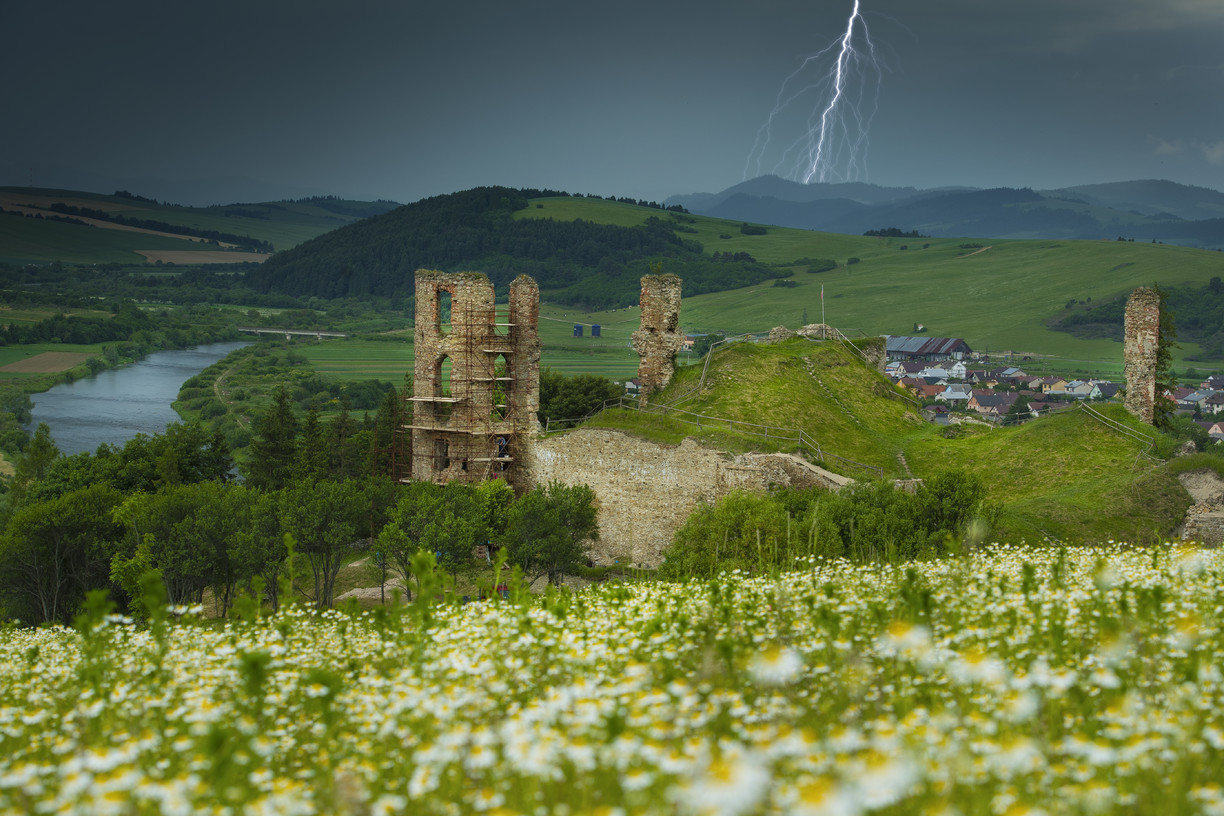
BREKOV
The medieval Brekov Castle was built in the 13th century as a guard castle together with other nearby castles - Jasenov, Vinné, Čičva. Two centuries later, its fortifications were strengthened so that it could withstand the the battle between the armies of King Matthias Corvinus and the Polish ruler Casimir IV.
As it happens, the castle has changed several owners. Under František Kendy, in 1558, the castle was captured and demolished by King Ferdinand of Habsburg. Despite the restoration and repairs, it had to face several more war expeditions. The anti-Habsburg uprisings at the end of the 17th century were fatal for the castle. From the castle hill there is a magnificent, distant circular view. K popular events at the castle include the Drugeth Festival in July or the New Year's Eve climb to the castle.

CHOIRS
Nearby Bardejov located ruins Zborov Castle. The Gothic castle was built at the turn of the 13th and 14th century as a protection of the trade route to Poland. A popular route leads to the castle through the avenue of ancient oaks.
Already in 1926 the castle hill was declared a protected area, later in 1950 its protection was extended by declaring it a state nature reserve, thanks to which the Zborov Castle together with the ancient oaks belongs among the the oldest protected areas in Slovakia.

JASENOV
Jasenovský castle is approximately 4 km from Humenne. It was probably founded after the Tatar invasion in the 13th century. It was to guard the access road leading from southern Slovakia towards Humenné and further north. Jasenovský hrad is one of the first ruins in Slovakiawhich began to be repaired as early as the end of the 19th and the beginning of the 20th century. From the castle there are beautiful views of the surrounding countryside.

CHICAGO
In the 16th and 17th centuries, the Book of Lies and Liars was located in the castle of Čičva. Along with the names of liars, all their lies were written down in it. For some time, the castle also belonged to the bloody Countess Elizabeth Báthory, and later to her daughter Catherine, who married Juraj Drubet of Humenne. This brought the castle into the hands of the Drugets, who were responsible for its greatest boom. More about the rich history of the castle Čičva Castle is located on the right bank of the Ondava River, above the village of Sedliská in the Vranov nad Topľou district.

STONE CASTLE
On a limestone cliff in the Čergov Mountains lies the ruins of Kamenický Castle. It was built around 1248. It changed several owners, resisted the pressure of enemies until it was destroyed in 1556. The destruction of the former pride on the cliff was also caused by the Tahy family. Before history she preferred "burnt". During the construction of the distillery in Lúčka, in the 19th century, the castle walls were used as a cheap building material. The castle is undergoing restoration and its preservation is being taken care of by Stone Tower Civic Association.
SHEBES
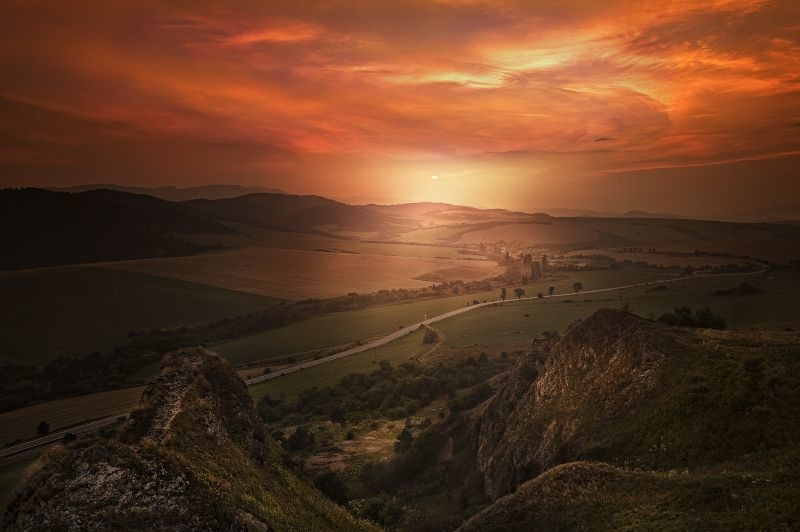
The predecessors of many stone castles were wooden castles. It was the same with the castle Šebeš. Its predecessor in the 13th century was the guard castle Raven. It brought together an order of knights dressed in black cloaks. Two centuries later it was rebuilt into Castum Sebes, Sebeswar. Today, it is called Sebes Castle. The castle of Sebes was characterised by a circular tower with thick walls, as well as a residential palace with a defensive wall.